
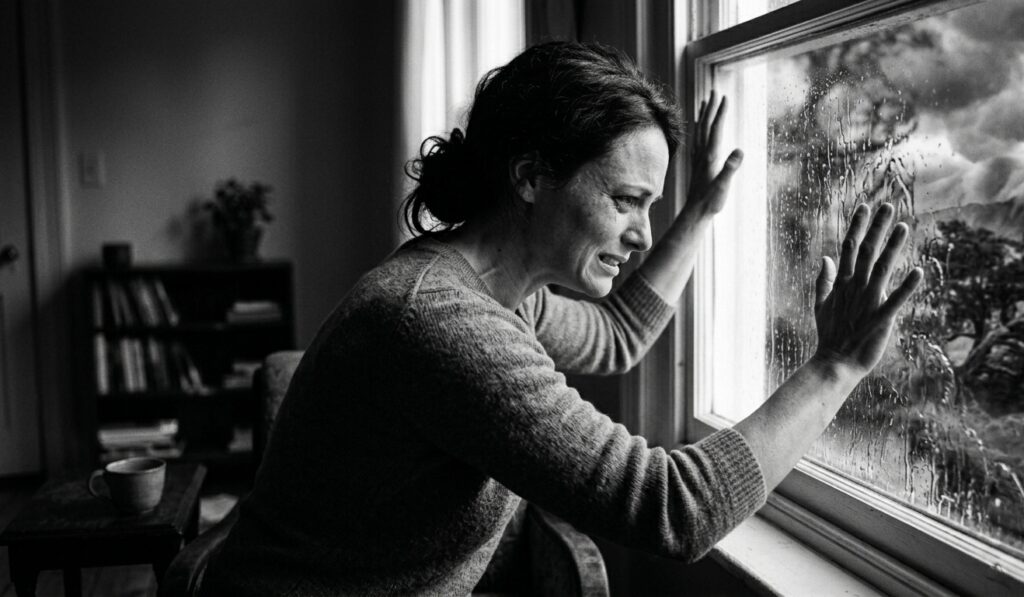
Trauma may shape part of your story, but it is not the whole story of who you are. What happened to you matters. It may have altered the way you move through the world, the way you relate to others, the way you understand safety, trust, and yourself. It may have left emotional, relational, physical, and deeply internal marks. But even when trauma has touched many parts of a life, it does not contain the entirety of a person’s identity.
This can be difficult to remember when pain has been prolonged, repeated, or formative. Trauma has a way of becoming central not because it is all that a woman is, but because survival often demands so much attention. When life has required vigilance, protection, endurance, or emotional containment, it can begin to feel as though the injury has become the most visible and governing truth. The wound may seem louder than everything else. The fear may feel more immediate than desire. The grief may feel more familiar than possible.
In these conditions, many women begin to experience themselves primarily through what has happened to them. They may come to see themselves through the language of damage, limitation, or aftermath. They may feel known only by their losses, their symptoms, their coping mechanisms, or the ways trauma has changed them. Their identity can begin to narrow around pain.
This is one of trauma’s quieter thefts: it can reduce a woman’s sense of self to what she has endured.
When this happens, it is not because she is weak, dramatic, or unable to move on. It is because trauma can reorganise a person’s inner world. It can shape attention, memory, nervous system responses, emotional expectations, and relational patterns. It can make survival feel like a full-time identity. And when survival has been necessary for a long time, it is understandable that a woman may struggle to imagine herself beyond it.
But survival, while honourable, is not the whole self.
You are not only the wound.
Not only the fear.
Not only the grief.
Not only the hypervigilance, numbness, shutdown, people-pleasing, self-protection, or exhaustion that may have followed what hurt you.
You are also the woman who kept going.
You are the woman who found ways to endure what should never have been asked of her. The woman who adapted because she had to. The woman whose coping was not always graceful, but was often brilliant in its effort to preserve life, dignity, and function. The woman who may have felt broken at times and yet still rose, still worked, still cared for others, still made it through days that asked more of her than anyone could see.
There is dignity in that survival. There is intelligence in it. There is testimony in it. But even that endurance is not the full measure of who you are.
You are also the woman who still longs for peace.
Beneath fear, there may still be tenderness. Beneath exhaustion, there may still be hope. Beneath the guardedness that trauma can create, there may still be a desire for softness, connection, joy, stability, truth, and rest. These longings are not signs of fragility. They are signs that something in you remains oriented toward life. Even after pain, even after disappointment, even after betrayal or harm, there may still be a part of you that reaches for what is good, steady, and whole.
That part matters.
Trauma may have taught you to become vigilant, but vigilance is not your deepest identity. Trauma may have taught you to expect harm, but expectation of harm is not the truest definition of your nature. Trauma may have shaped your reactions, but it did not erase your humanity, your complexity, or your inherent worth.
A woman is always more than the worst thing that has happened to her.
This truth can feel complicated, especially because honouring it does not require minimising pain. To say that you are more than what happened to you is not to deny the seriousness of what happened. It is not to spiritualize suffering, rush healing, or pretend that trauma leaves no lasting impact. It is not a demand to become inspirational. It is not pressure to be resilient in a polished, performative way.
It is an invitation to remember that injury is not identity.
What happened to you deserves acknowledgement. It deserves language. It deserves care. It deserves grief. If trauma has altered your life, that matters. If it changed your nervous system, your trust, your body, your relationships, your capacity to feel safe, your sense of self, or your ability to rest, that matters. Nothing about healing requires pretending those consequences are small.
But your worth was never established by what someone did to you, failed to do for you, or took from you.
Your worth does not decrease because you struggle.
It does not disappear because healing is slow.
It is not diminished by symptoms, setbacks, confusion, fear, grief, or the ways you learned to cope.
Worth is not something trauma has the authority to revoke.
For many women, one of the deepest parts of healing is not only processing pain, but reclaiming identity. This often means asking quiet but profound questions:
Who am I beyond my adaptations?
What remains in me that trauma did not destroy?
What do I love, long for, value, or carry that is not defined only by survival?
What parts of me have been hidden, silenced, or neglected while I was trying to get through?
What kind of life do I want to belong to, not just endure?
These questions are not always easy to answer. Trauma can obscure access to selfhood. It can make a woman more familiar with managing distress than exploring desire. She may know how to read danger but not how to imagine delight. She may be practised in endurance but uncertain about pleasure, creativity, rest, or choice. She may know who she needed to be to survive, but not yet know who she is when she is no longer organising every moment around protection.
This discovery takes time.
Healing is not only about reducing symptoms. It is also about making room for personhood. It is about remembering that there is an identity beneath coping, and sometimes alongside coping, that still deserves expression. It is about permitting oneself to be a whole human being rather than a constant emergency response.
This may look like a very small beginning.
It may mean noticing what brings a sense of calm. It may mean reconnecting to preferences that were once dismissed. It may mean allowing beauty, pleasure, creativity, rest, curiosity, or laughter to return without guilt. It may mean exploring what feels meaningful, what feels true, what feels like home in the self. It may mean discovering that healing is not only about tending to pain, but also about making space for what trauma tried to crowd out.
There is life beyond survival.
That statement can feel distant or even threatening to someone who has had to survive for a long time. Survival may feel more familiar than peace. Safety may feel uncertain. Rest may feel undeserved. Joy may feel fragile. When a woman has lived in a prolonged state of adaptation, she may not immediately trust ease, softness, or expansion. She may feel guilt when things begin to feel lighter. She may fear that healing means vulnerability, disappointment, or loss.
This, too, is understandable.
The movement beyond survival is often gentle and uneven. It does not happen by force. It happens by creating enough safety, enough support, and enough internal permission for life to become more than crisis management. It happens when a woman begins to believe that she is allowed not only to endure, but also to live and allowed not only to cope, but also to want. Allowed not only to recover function, but also to recover the self.
You are allowed to heal slowly, honestly, and with dignity.
You are allowed to be changed by what happened and still not be defined by it.
You are allowed to carry scars and still belong to a future.
You are allowed to tell the truth about your pain without making pain the only language through which you know yourself.
You are allowed to be complex.
You are allowed to become.
You are allowed to have an identity that includes suffering but is not confined to suffering.
This is not denial. It is restoration.
To reclaim selfhood after trauma is not to erase the past. It is to place it in its rightful context. What happened to you is part of your story, and perhaps a significant part. It may always matter. But it is not the only chapter. It is not the whole narrative. It is not the final word on your value, your capacity, your beauty, your future, or your becoming.
There is more to you than what hurt you.
There is the self that endured.
There is the self that grieved.
There is the self that protects.
There is the self that still hopes.
There is the self that longs for peace.
There is the self that is learning to trust, to soften, to breathe, to choose, to speak, to rest.
There is the self that trauma touched, but did not fully take.
And there is still life ahead that can be lived from that truth.
Not perfectly.
Not all at once.
Not without tenderness for what has been hard.
But genuinely.
What happened to you matters.
It deserves compassion.
It deserves witness.
It deserves care.
But it does not define your worth.
You were always more than the harm.
And you remain more than the aftermath.
Written by Steve De’lano Garcia