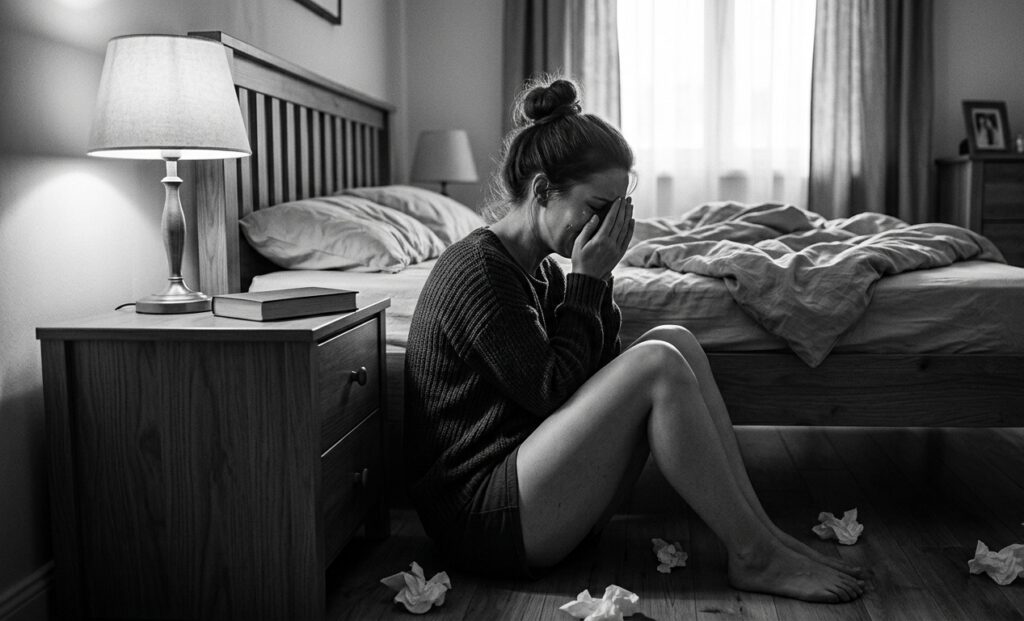
Trauma is often spoken about as if it only belongs to extreme moments. People tend to imagine a single shocking event, followed by visible distress, followed by a clear recovery story. In real life, it is often far less neat than that.
For many women, trauma does not only exist in memory. It continues in daily habits, relationships, thoughts, body sensations, and emotional patterns. It can shape the way a woman moves through an ordinary Tuesday morning just as much as it shapes the way she remembers a painful past.
A woman can be working, parenting, studying, caring for others, replying to emails, making appointments, and keeping everything afloat, while also carrying the effects of trauma in ways that other people do not see. She may be praised for how well she copes. She may be seen as reliable, calm, practical, organised, and strong.
All of those things may be true.
But they do not always mean she feels safe, settled, or at ease inside herself.
Many women live with a nervous system that has learned, through painful experience, that the world can turn unsafe quickly. Even when life on the outside looks stable, the body may still be preparing for threat. The mind may still be rehearsing danger. The heart may still be carrying old fear into present moments.
Trauma can be loud, but it can also be quiet. It can be dramatic, but it can also be woven into normal life so deeply that a woman may not even realise how much of her energy is going into survival.
Trauma is not always obvious
One of the most damaging misunderstandings about trauma is the belief that it should be easy to spot. Many people expect trauma to look visibly broken, distressed, chaotic, or dysfunctional. They may assume that if a woman is getting through the day, then she must be fine.
That assumption misses how trauma often works.
A woman may look composed because she has spent years learning how to hold herself together. She may smile because it feels safer than explaining. She may stay busy because stopping feels unbearable. She may appear highly capable because competence became one of the ways she protected herself.
Sometimes trauma shows up not as collapse, but as constant control.
Sometimes it appears as over-achieving, perfectionism, people-pleasing, emotional numbness, or being the person everyone else relies on. Sometimes it looks like never asking for help. Sometimes it looks like appearing calm while feeling deeply unsettled underneath.
This is why trauma can be missed not only by others, but by women themselves. If certain patterns have been present for a long time, they can start to feel like personality rather than adaptation. Hypervigilance can feel like being responsible. Emotional suppression can feel like maturity. Chronic self-sacrifice can feel like kindness. Difficulty resting can feel like ambition.
But survival strategies, however understandable, still come at a cost.
The body often carries what words cannot
Trauma is not only a story in the mind. It is also something the body can hold.
A woman may know, logically, that she is safe now, yet her body may not respond as if safety has fully arrived. She may struggle to relax even in quiet moments. Rest may feel unfamiliar, uncomfortable, or even unsafe. Her shoulders may remain tense. Her breathing may stay shallow. Her sleep may be light, broken, or full of vivid dreams. She may startle easily, feel exhausted for no clear reason, or notice that her body is always waiting for something.
This can be confusing, especially when there is no visible crisis in the present.
The body, however, does not always separate past from present in a simple way. If it has learned to survive through alertness, bracing, pleasing, freezing, or disconnecting, it may continue using those responses long after the original danger has passed.
This does not mean a woman is weak or overreacting. It means her system learned to protect her.
Many women living with trauma describe feeling tired in a way that sleep alone does not fix. This is not ordinary tiredness. It is the fatigue of constant internal effort. It is the exhaustion of monitoring mood, scanning for tension, avoiding conflict, containing emotion, and trying to stay acceptable, safe, and in control.
That kind of exhaustion can become so normal that it is barely questioned. A woman may blame herself for not coping better, when in truth she has been carrying far more than most people realise.
Hypervigilance can hide in plain sight
Hypervigilance is often associated with obvious fear, but in everyday life it can look much more subtle.
It can look like checking the tone of a message again and again before replying. It can look like noticing every change in someone’s facial expression. It can look like always choosing the seat that allows a clear view of the room. It can look like mentally preparing for bad news before the phone even rings. It can look like finding it difficult to switch off, even when nothing appears to be wrong.
For some women, hypervigilance means being highly tuned to other people’s moods. They may sense tension quickly and respond before anything is said. They may become skilled at anticipating conflict, soothing discomfort, and adjusting themselves to keep situations stable. Other people may call them thoughtful or emotionally intelligent.
Sometimes they are.
But sometimes they are also living in a state of constant alertness, watching for what might shift, what might go wrong, or what might become unsafe.
This can make relationships very tiring. A woman may be listening not only to what is being said, but to what might be meant, what might happen next, and what she needs to do to prevent harm, rejection, anger, disappointment, or withdrawal.
When this pattern is deeply ingrained, peace can feel unfamiliar. Calm may not feel calming. It may feel suspicious. The absence of threat may not register as safety, but as the moment before something changes.
Trauma can affect the way women speak, stay silent, and apologise
Trauma often shapes communication in quiet but powerful ways.
A woman may find it difficult to say what she really feels. She may soften everything. She may rehearse conversations in advance. She may avoid bringing up needs because experience taught her that honesty led to punishment, dismissal, humiliation, conflict, or abandonment.
She may apologise quickly, even when she has done nothing wrong.
She may say sorry for taking up space, for asking a question, for needing time, for having a feeling, for setting a boundary, or for simply existing in a way that might inconvenience someone else. The apology may come so automatically that she barely notices it.
Silence can also become a form of protection. Some women learned early that speaking did not help, that no one listened, or that words made things worse. As adults, they may still go quiet when distressed. They may freeze in difficult conversations. They may struggle to explain themselves in the moment, only to think clearly much later when the situation has passed.
Others may mistake this for passivity, coldness, or lack of confidence. In reality, it may be a nervous system doing what it learned to do to survive.
People-pleasing is not always politeness
Women are often socialised to be accommodating, agreeable, and easy to be around. Trauma can intensify these pressures.
For some women, people-pleasing is not simply good manners. It is a deeply rooted safety strategy. It can come from learning that being liked reduced risk, that being useful earned protection, or that keeping others happy prevented criticism, neglect, anger, or harm.
This can make it difficult to recognise personal limits.
A woman may say yes when she wants to say no. She may overextend herself, feel responsible for everyone else’s emotions, or believe her value lies in how much she can carry. She may struggle to identify what she wants because so much of her attention goes into managing how others feel.
From the outside, this may look generous, selfless, or endlessly capable.
On the inside, it can feel like disappearing.
When a woman has spent years orienting herself around other people’s comfort, preferences, and reactions, she may lose touch with her own needs. She may feel guilty for resting, selfish for setting boundaries, or anxious when someone is disappointed in her. Even healthy conflict may feel overwhelming because it triggers old fear.
This is one reason healing can feel strange at first. Learning to speak honestly, say no, ask for help, or take up space may not feel empowering straight away. It may feel frightening, exposing, or deeply uncomfortable.
Trauma can shape relationships long after the event is over
Trauma often affects how safe closeness feels.
Some women long for connection but find intimacy difficult. They may fear being hurt, left, controlled, judged, or misunderstood. They may pull away when someone gets too close, or become overly focused on keeping the relationship secure. They may tolerate poor treatment because instability feels familiar. They may mistake intensity for safety, or struggle to trust calm and consistency when they finally encounter it.
Trauma can create painful contradictions.
A woman may want love and also fear it.
She may want to be seen and also fear being known.
She may want support and also feel unsafe depending on anyone.
She may crave steadiness and yet feel uneasy when things are actually steady.
These contradictions are not signs of failure. They are signs of a system trying to protect itself while also longing for connection.
Friendships can also be affected. A woman may be the dependable one who supports everyone else but shares little of her own inner life. She may feel lonely in company, uncertain of who she is without a role to perform. She may withdraw when struggling because vulnerability feels dangerous. She may fear being too much, too needy, too emotional, or too complicated.
In this way, trauma can leave women surrounded by people and still feeling alone.
High functioning does not cancel out pain
One of the most overlooked forms of suffering is high-functioning distress.
A woman may continue to perform well in public while feeling deeply overwhelmed in private. She may meet deadlines, keep promises, make meals, attend meetings, and smile through conversations, only to crash afterwards in silence. She may look productive while feeling detached from herself. She may appear organised while internally managing fear, grief, numbness, or panic.
Because she is still functioning, her pain may be minimised.
Other people may say, “But you’re doing so well.”
They may point to everything she manages as proof that she is fine.
Yet functioning is not the same as flourishing.
A woman can be surviving brilliantly and still be suffering. She can be competent and exhausted. She can be caring and overwhelmed. She can be successful and deeply dysregulated. She can be strong and still need support.
This matters because many women do not seek help until they are close to breaking point. They may feel they have to earn support by becoming visibly unwell. They may think that unless they completely fall apart, their pain does not count.
But pain does not need to become catastrophic to be real.
Trauma can affect identity
When trauma is long-lasting, repeated, or experienced during important developmental years, it can shape more than behaviour. It can shape identity.
A woman may come to believe that she is too sensitive, too difficult, too emotional, too demanding, or never enough. She may carry shame that does not truly belong to her. She may interpret her reactions as personal flaws rather than the understandable effects of what she has lived through.
This can create a deeply painful inner life.
Instead of asking, “What happened to me?” she may ask, “What is wrong with me?”
Instead of recognising survival responses, she may see weakness.
Instead of noticing how hard she has worked to endure, she may judge herself for not being more resilient, more healed, more normal.
Trauma can narrow a woman’s sense of self until she is known more by her roles, responsibilities, and coping mechanisms than by her actual preferences, joy, creativity, or aliveness.
Some women become the helper, the achiever, the peacekeeper, the one who never needs much, the one who always handles things. These identities may have helped them survive. But over time, they can also become cages.
Healing often involves more than reducing symptoms. It can also involve slowly discovering who a woman is beyond survival.
The effects of trauma are influenced by culture, gender, and expectation
Women do not experience trauma in a vacuum. Their experiences are shaped by the social world around them.
Many women are taught, directly or indirectly, to prioritise others, minimise their needs, remain pleasant, keep the peace, and carry emotional labour without complaint. They may be disbelieved when they speak about harm. They may be praised for endurance rather than supported in pain. They may be expected to continue functioning regardless of what they have lived through.
This context matters.
It affects which experiences are recognised as traumatic and which are dismissed.
It affects whether a woman feels entitled to call what happened harmful.
It affects whether she receives support or scepticism.
It affects how quickly she blames herself.
Certain forms of trauma that disproportionately affect women, including coercive control, emotional abuse, sexual violence, chronic invalidation, and relational betrayal, are still often misunderstood. Because these forms of harm may not always leave visible marks, they can be minimised by others and even by the women who have endured them.
Yet repeated fear, humiliation, powerlessness, and violation can profoundly shape a person’s nervous system and sense of self.
Trauma is not measured only by what happened on paper. It is also measured by what it did inside a person.
Trauma can make ordinary life feel harder than it looks
Tasks that seem simple to others may require a great deal of effort for a woman living with trauma.
Replying to a message may involve anxiety about tone.
Going to a social event may involve hours of mental preparation.
Resting may bring up guilt or unease.
Making a mistake may trigger disproportionate shame.
A minor disagreement may feel physically overwhelming.
An unexpected change of plan may create distress that feels difficult to explain.
These reactions can be isolating, particularly when a woman herself does not fully understand them. She may feel embarrassed by how strongly she reacts. She may compare herself to others and conclude that she is failing at ordinary life.
But ordinary life is not ordinary when your system is carrying the imprint of fear.
The issue is not that she is weak. The issue is that everyday situations may be touching old wounds, old patterns, and old protective responses that are still active beneath the surface.
Healing is rarely linear or tidy
There is often pressure to tell healing stories in a clean and inspiring way. In reality, recovery from trauma is usually uneven.
A woman may understand her patterns intellectually and still struggle to change them in practice. She may have periods of steadiness followed by periods of exhaustion or reactivity. She may feel strong in one area of life and deeply vulnerable in another. She may leave harmful situations and still carry their effects for years.
This does not mean healing is not happening.
Healing often looks like small shifts repeated over time. It may look like noticing tension in the body sooner. It may look like pausing before apologising unnecessarily. It may look like recognising a trigger instead of automatically blaming oneself. It may look like setting one honest boundary. It may look like allowing rest. It may look like speaking about pain in words that once felt impossible.
It may also involve grief.
Because healing is not only about moving forward. It is sometimes about mourning what was lost: safety, trust, innocence, time, ease, confidence, or the version of self that might have existed without the need to survive so much.
That grief is not a setback. It is often part of telling the truth.
What compassion can make possible
Many women have spent years responding to their trauma-shaped patterns with criticism. They call themselves dramatic, needy, lazy, difficult, guarded, controlling, cold, clingy, over-sensitive, or too much. They judge the very responses that once helped them endure.
Compassion offers a different starting point.
Compassion does not mean pretending pain is not painful. It does not mean excusing harm or avoiding responsibility. It means looking at survival responses with honesty and care. It means understanding that patterns developed for reasons. It means recognising that a woman may be doing her best with a nervous system shaped by experiences she did not choose.
For many women, this shift is profound.
When self-judgement softens, space opens for curiosity.
When curiosity grows, patterns become easier to understand.
When understanding deepens, change becomes more possible.
This is not instant. It takes time to build safety inside a body and life that have known too much fear. But it matters. And it is possible.
A quieter, truer understanding of trauma
Trauma in women does not always look the way people expect. It does not always shout. Sometimes it whispers through tiredness, overthinking, perfectionism, silence, over-functioning, irritability, numbness, vigilance, and the inability to fully settle.
It can live in a body that is always braced.
It can live in a smile that hides strain.
It can live in the need to stay useful.
It can live in the fear of being difficult.
It can live in the reflex to apologise.
It can live in the loneliness of seeming fine.
A woman may be carrying trauma even while doing everything she can to keep life moving. She may be surviving in ways that look, from the outside, like success. She may be praised for her strength while longing, quietly, for softness, safety, and rest.
To understand trauma more truthfully, we need to look beyond appearances. We need to make room for the women who are functioning but struggling, coping but tired, strong but not at peace.
Because trauma is not only found in breakdown.
Very often, it is found in the long, invisible effort of trying to hold everything together.
Written by Steve De’lano Garcia