
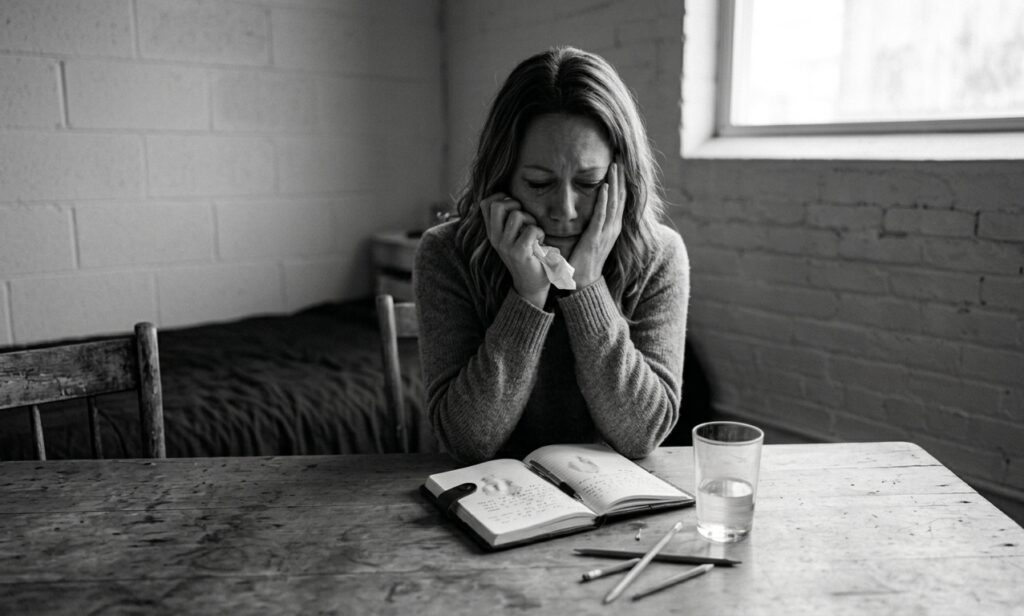
For women healing from trauma, self-care is often misunderstood.
It is often presented as something pretty, polished, or comforting on the surface. It is sold as candles, baths, skincare, weekends away, or small luxuries that promise relief. While there is nothing wrong with any of those things, they are not the foundation of healing. They can be pleasant, but they do not always reach the deeper needs of a nervous system that has been living in stress, fear, grief, or long-term survival.
Real self-care is not about appearance. It is not about performing wellness. It is not about creating the image of a woman who is doing fine.
Real self-care is about support.
It is about learning to ask honest questions and staying long enough to hear the answers.
What helps my body soften?
What helps my mind slow down?
What helps me feel steadier, more nourished, and safer?
These questions matter because trauma affects the whole person. It not only lives in memory. It can live in the body, in sleep, in digestion, in relationships, in attention, in energy, and in the quiet ways a woman learns to leave herself in order to keep functioning. Many women become highly capable while also feeling deeply exhausted. They learn how to carry responsibility, stay alert, care for others, and keep moving. But they may not know how to rest without guilt, how to receive care without discomfort, or how to notice their own needs before they become urgent.
That is why gentle self-care matters.
It is not shallow. It is not weak. It is not optional. It is part of the repair.
The most helpful forms of self-care are often the least glamorous. They are simple, practical, and easy to overlook. But they create the conditions that healing needs. They help the body feel less neglected. They help the mind experience less pressure. They help the nervous system learn that support is available now, even if it was missing before.
Sometimes self-care looks like very basic things.
A consistent bedtime.
A glass of water.
Protein and nourishment.
Quiet.
A walk.
A journal.
A therapy appointment.
Turning off what overwhelms.
Stepping back from what depletes.
Speaking to yourself with kindness.
These things may not look impressive from the outside, but they are powerful. They are powerful because they are stabilising. They communicate care in ways the body can actually register. They say, you matter enough to be supported. They say, your needs are not a burden. They say, you do not have to wait until collapse to deserve rest.
Why trauma changes the meaning of self-care.
For a woman who has lived through trauma, self-care can feel more complicated than it sounds. Even the idea of slowing down may feel uncomfortable. Rest can bring up anxiety. Silence can feel unfamiliar. Nourishment can feel undeserved. Gentleness can feel suspicious if life has taught her that she must always be prepared, productive, or pleasing to others.
This is one of the painful truths of healing. Survival skills can keep a person functioning for years, but those same skills can make restoration feel unsafe.
A woman may know how to push through exhaustion, but not how to respond to it.
She may know how to take care of everyone else, but not how to notice when she is depleted.
She may know how to stay useful, agreeable, high-performing, and dependable, while feeling completely disconnected from her own body and needs.
In that state, self-care is not simply about adding pleasant things. It is about rebuilding a relationship with herself.
That rebuilding often begins with small, repeated acts of care that seem almost too simple to matter. But simple does not mean insignificant. Healing usually depends less on dramatic breakthroughs and more on steady experiences of safety, nourishment, and honesty over time.
The self-care that actually supports healing.
The kind of self-care that helps trauma healing is usually the kind that supports regulation, steadiness, and self-trust. It helps a woman come back into a relationship with her own life. It gives her something reliable to lean on.
Below are some of the most important forms of gentle self-care, not as trends or ideals, but as practical support.
1. Regular rest, not just emergency recovery.
Sleep matters deeply for emotional regulation, stress tolerance, and physical healing. Many women in survival mode do not rest until they are overwhelmed, ill, or emotionally worn down. But the body needs regular care, not just repair after collapse.
A consistent bedtime can become a quiet form of protection. It tells the body that it does not have to keep bracing indefinitely. It creates rhythm. It reduces strain. Even when sleep itself is difficult, keeping a regular rhythm around rest can help the nervous system begin to expect support.
This may include turning lights down earlier, reducing stimulation before bed, staying off distressing media at night, or creating a simple evening routine that feels calm and predictable. It does not need to be perfect. It needs to be kind and repeatable.
2. Food and water as nervous system support.
When a woman is overwhelmed, nourishment is often one of the first things to become inconsistent. She may skip meals, rely on sugar or caffeine, eat irregularly, or disconnect from hunger altogether. This is common, especially when stress has become normal.
But food is not a reward. Hydration is not a luxury. These are forms of care that support the brain, the body, and emotional stability.
A glass of water can be an act of remembering yourself.
Protein and balanced nourishment can help reduce some of the physical stress that intensifies anxiety, irritability, shakiness, and fatigue.
Eating regularly can support a sense of grounding, especially for women whose trauma has taught them to ignore their needs until they become impossible to overlook.
This is not about dieting, control, or perfection. It is about asking, what would support my body today?
3. Quiet and reduced stimulation.
Many women carry more input than their nervous systems can comfortably process. Noise, constant messages, social media, bad news, pressure to respond, pressure to stay available, and pressure to keep taking in more can all add to a sense of overwhelm.
Quiet is not empty. Quiet can be medicine.
Turning off what overwhelms is a valid form of self-care. So is stepping away from voices, environments, expectations, or demands that leave the body feeling tense and flooded. Trauma healing often requires reducing unnecessary stimulation, not because a woman is weak, but because her system needs enough space to recover.
Sometimes support looks like saying no to one more conversation.
Sometimes it looks like not reading comments.
Sometimes it looks like leaving the television off.
Sometimes it looks like sitting in a quiet room and letting the body exhale.
These moments matter. They create room for the nervous system to come down from constant activation.
4. Movement that helps the body feel inhabited again.
Exercise is often discussed in ways that are harsh, punishing, or appearance-focused. But gentle movement can be something very different. It can be a way of returning to the body with less pressure and more respect.
A walk is one of the simplest examples. It can help release tension, support mood, improve sleep, and interrupt mental spirals. More importantly, it can help a woman feel present in herself again. It can offer movement without force.
Trauma can leave a woman feeling disconnected from her body, mistrustful of it, or only aware of it when something feels wrong. Gentle movement can begin to rebuild a sense of connection. The goal is not performance. The goal is contact. It is the experience of being with yourself in a way that feels steady and tolerable.
5. Reflection that creates clarity.
A journal can become a private place where the inner life is allowed to exist without interruption. Many women who have experienced trauma become used to overriding their thoughts, minimising their feelings, or adapting so fully to others that they lose access to what they really feel.
Writing can help slow this process down.
It can help identify patterns.
It can reveal what is draining energy.
It can show what brings relief.
It can uncover grief, anger, fear, hope, or needs that have been pushed aside for a long time.
A journal does not need to be eloquent. It does not need to become a polished record of healing. It only needs to be honest. A few truthful lines can do more than pages of writing that stay on the surface.
6. Professional support that creates safety and depth.
A therapy appointment may not look like self-care in the way popular culture describes it, but for many women, it is one of the deepest forms of care available. Therapy can provide language, structure, witness, and support for what has been too painful, confusing, or heavy to carry alone.
It can also help a woman understand her patterns without shaming herself for them. Many trauma responses make sense in context. Therapy can create a place where survival strategies are met with understanding while new forms of support are slowly built.
Not every woman has access to therapy, and not every therapist is the right fit. That reality matters. But where safe and accessible support is available, it can be a meaningful part of self-care because it is rooted in truth, care, and long-term healing rather than short-term escape.
7. Boundaries that reduce depletion.
Stepping back from what depletes is not selfish. It is often necessary.
Many women healing from trauma have been trained to overextend themselves. They may feel responsible for everyone’s comfort, be afraid of disappointing others, or be unsure whether they are allowed to have limits. This can make boundaries feel uncomfortable, even when the absence of boundaries is causing harm.
But self-care is not only about what a woman adds to her life. It is also about what she stops allowing to drain her.
This may mean less time with people who leave her feeling small, tense, guilty, or emotionally exhausted.
It may mean pausing certain commitments.
It may mean responding more slowly.
It may mean acknowledging that constant availability is not the same as love.
Every healthy boundary sends a message inward. It says, I am paying attention to what this costs me. It says, ” My energy is not endless. It says, I do not have to abandon myself to be a good person.
8. less violent Self-talk.
Many women speak to themselves in ways they would never speak to another hurting person. Trauma often leaves behind an inner voice shaped by criticism, fear, shame, or relentless pressure. Even after the original harm has ended, the internal tone may remain harsh.
Speaking to yourself with kindness does not mean pretending everything is fine. It does not mean using forced positivity. It means becoming less cruel to yourself while healing.
It may sound like this:
I am overwhelmed, and I need a pause.
This is hard for me right now.
I do not need to shame myself for struggling.
I can take this one step at a time.
My needs are real.
Rest is allowed.
This kind of inner language matters because the nervous system responds not only to external conditions, but also to internal ones. A harsh inner world can keep the body activated. A gentler one can help create space for regulation, grief, and repair.
Why the simple things are often the most powerful.
There is a reason the basics matter so much. Trauma often disrupts the ordinary foundations of life. It can interfere with sleep, appetite, energy, focus, and the ability to feel safe in stillness or connection. Because of this, healing often begins not with dramatic change, but with restoring what has been worn down.
The body responds to patterns.
The nervous system responds to repetition.
Trust is built through consistency.
That is why small acts of care can have such depth. A consistent bedtime may seem minor, but it tells the body that rest is being considered. A meal with real nourishment says that depletion is being noticed. Turning off something overwhelming says that inner peace matters more than endless input. Cancelling one draining obligation says that limits are allowed.
These moments may not look significant to others. But healing is often built in private, quiet ways.
It is built when a woman begins to notice the difference between what numbs her and what supports her.
It is built when she learns that care is not something she has to earn.
It is built when she stops waiting for a crisis to justify tenderness.
It is built when she becomes someone who does not disappear from her own life.
When self-care feels unfamiliar.
For many women, this kind of self-care does not come naturally at first. It may feel uncomfortable, unnecessary, or even wrong. That does not mean it is not needed. It usually means survival has been in charge for a long time.
If a woman has spent years bracing, performing, achieving, enduring, or staying hyper-aware of other people’s needs, then receiving support may feel deeply unfamiliar. She may not know what helps her soften because she has not had much room to ask. She may not know what brings steadiness because she has spent so much time managing urgency.
This is why self-care in trauma healing must be gentle.
Not all at once.
Not perfectly.
Not as another set of standards to fail.
But steadily.
The goal is not to become flawless at caring for yourself. The goal is to become more responsive to yourself. It is worth noticing sooner. To listen with more honesty. To abandon yourself less often. To create a life that your body does not have to fight so hard to survive.
A more honest definition of self-care.
Perhaps the clearest way to understand self-care is this:
Self-care is any repeated act that helps you feel more supported, more grounded, and less abandoned by yourself.
Sometimes that act is small.
Sometimes it is deeply difficult.
Sometimes it is as basic as drinking water and going to bed on time.
Sometimes it is making the therapy appointment.
Sometimes it is declining what drains you.
Sometimes it is sitting still long enough to admit that you are tired.
None of this is glamorous. Much of it is quiet. Some of it is invisible to everyone else.
But it helps.
And for a woman healing from trauma, help matters more than appearance.
Healing asks for restoration.
It asks for care that is practical enough to hold real life.
It asks for gentleness that does not disappear when things get hard.
It asks for the kind of support that helps a woman feel safer in her body, clearer in her mind, and more connected to herself over time.
That is the self-care that actually helps.
It may be simple.
It may be slow.
But it is powerful.
Written by Steve De’lano Garcia