
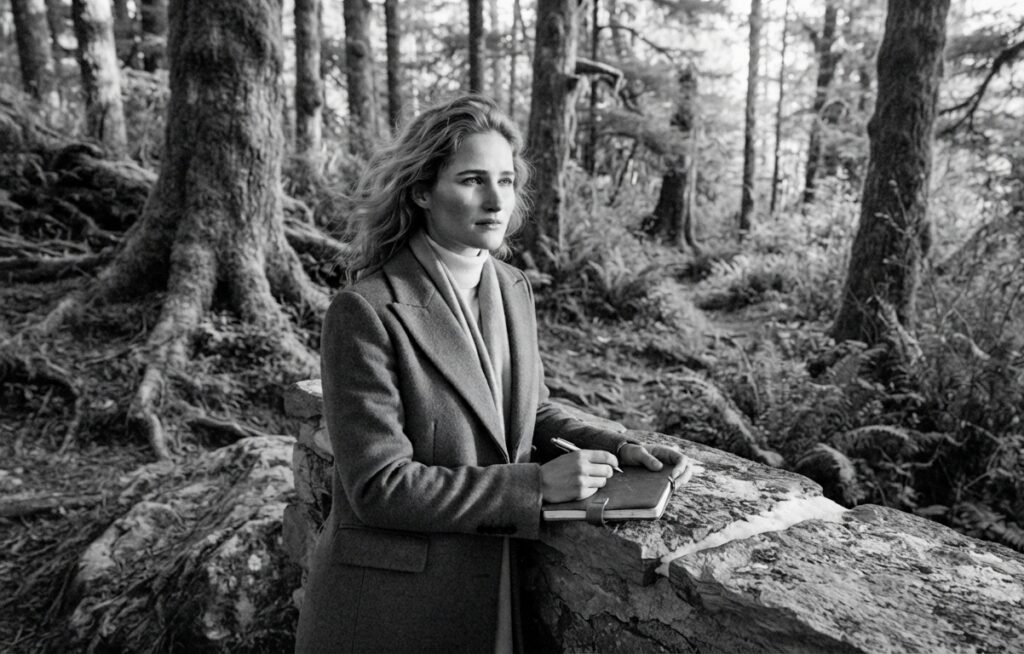
There is a particular kind of woman people admire with ease and misunderstand with equal ease.
She is the woman who keeps going, even when she should have been permitted to stop. She is the woman who handles what needs to be handled, often before anyone else has fully recognised that something is wrong. She is composed in difficult moments, practical in chaos, and measured in crisis. She is the one people turn to when life fractures, when emotions run high, when decisions must be made, when others feel overwhelmed. She is dependable, capable, and steady. She carries more than most people realise, and she carries it so quietly that her burden often disappears beneath the image of her competence.
People call her strong.
At first, that word may feel affirming. It may sound like respect. It may even feel like one of the few forms of recognition she receives. But over time, being called strong can become complicated. It can stop feeling like a compliment and begin to feel like an assignment. A role. An expectation. A narrow and demanding identity she is no longer free to step outside of without disappointing someone.
Many women know this role intimately.
They know what it is to endure as a way of life. They know how to remain functional while exhausted, how to continue meeting responsibilities while something inside them is fraying, how to care for others while neglecting themselves so thoroughly that self-abandonment begins to feel normal. They know how to push down emotion until it becomes silent enough to live beside. They know how to make pain unobtrusive, how to keep it neat, private and undemanding, so that nobody has to be inconvenienced by the truth of what they are carrying.
From the outside, this kind of strength is often celebrated. It is praised because it is useful. It is admired because it is efficient. It reassures other people. It makes families function, workplaces run, friendships hold, crises soften. The strong woman is often described as resilient, reliable, grounded, organised, impressive. She may indeed be all of those things.
But what is often missed is the cost of becoming the person who can always be relied upon.
Because being the strong one is not only an identity. Very often, it is an adaptation.
For many women, strength did not emerge from a life of abundance, support and emotional safety. It was not simply a personality trait that appeared in ideal conditions. It was forged in necessity. It developed because there was no meaningful alternative. Because somebody had to cope. Because no one else did. Because the environment was unstable. Because vulnerability was ignored, punished or exploited. Because tenderness was not protected. Because asking for help led nowhere. Because rest was unavailable. Because pain did not pause the demands of daily life. Because survival required composure long before healing was ever possible.
This is why the strong woman is so often carrying more than she can name.
Her strength may not be evidence that life has been gentle with her. It may be evidence that life has required too much from her, too early, for too long. What appears admirable may also be deeply sad. Not because strength itself is sad, but because of what it sometimes reveals: that she learned to survive by becoming dependable to everyone, including at her own expense.
And when a woman has lived this way for years, sometimes decades, strength can become difficult to separate from self-worth.
This is one of the quieter legacies of trauma in women. Survival strategies begin as responses to difficult conditions, but over time they harden into identity. Competence becomes protection. Hyper-independence becomes safety. Over-functioning becomes virtue. Self-denial becomes maturity. Being the one who manages everything becomes the way a woman proves her value, secures her place, and protects herself from being seen as needy, difficult or disappointing.
The difficulty is that survival identities do not always dissolve when the danger has passed.
A woman may leave the environment that shaped her and still feel unable to put anything down. She may find herself in relationships where support is available and still struggle to receive it. She may long for rest yet feel guilty the moment she takes it. She may crave softness yet distrust it when it appears. She may insist she is fine even when she is deeply unwell, because somewhere in her body and mind the old lesson remains: keep going, do not need too much, do not fall apart, do not become a burden, do not let anyone see how much this costs.
So she continues.
She continues long after the original season of survival has changed. She continues because not carrying everything feels unfamiliar. She continues because competence has become the language through which she is loved, respected and recognised. She continues because if strength has been the trait most rewarded in her, then laying it down can feel less like relief and more like risk.
This is the loneliness hidden inside so much female strength.
It is the loneliness of being seen for what you provide rather than for what you feel. The loneliness of being admired for your endurance while your exhaustion goes largely unnoticed. The loneliness of being the dependable one in every room and still not knowing where your own dependence is allowed to go. The loneliness of being surrounded by people and yet privately unconvinced that anyone truly sees the effort it takes for you to keep appearing intact.
A woman in this position may look powerful while feeling deeply alone. She may appear calm while internally overwhelmed. She may be praised for how much she can carry while never being asked whether she should have had to carry so much in the first place.
That question matters.
Not simply how much she can manage, but why has she been expected to manage so much? Why is her capacity so often treated as permission to ask more of her? Why do people so readily celebrate women for enduring circumstances that should have been eased, shared or prevented? Why is resilience so often admired without equal concern for what made such resilience necessary?
There is a cultural habit of romanticising women’s strength while neglecting women’s pain. We speak glowingly of endurance, sacrifice and selflessness. We applaud the woman who keeps everything together. Yet too often, this admiration becomes a way of overlooking need. If she is strong, people assume she is fine. If she is capable, they assume she does not require care. If she is the one who solves problems, they forget she may also need somewhere safe to place her own.
This is how strength becomes a trap.
Not because strength is wrong, but because it is too often demanded without tenderness. Expected without reciprocity. Praised without protection. The strong woman becomes invaluable to others and invisible to herself. She can become so practised at functioning that she loses touch with the parts of her that ache, grieve, fear and long. She can become so accustomed to being needed that she no longer knows how to exist when she is not useful.
And this is where healing can feel particularly frightening.
Healing does not always begin with dramatic transformation. Sometimes it begins with a deeply uncomfortable question: what if strength is not only endurance? What if it is not only pushing through, holding together, staying composed and asking little? What if strength also includes honesty? What if it includes tears, uncertainty, boundaries, surrender, rest? What if strength looks like saying, ‘I cannot do all of this alone’? What if it looks like disappointing expectations that were never fair to begin with? What if it looks like needing what you have spent years providing for everybody else?
For a woman who has built her life around being the strong one, these questions can feel destabilising.
Need may feel unsafe. Rest may feel undeserved. Softness may feel exposed. Receiving may feel uncomfortable, even humiliating. To stop over-functioning may feel like failure. To ask for help may feel like weakness. To admit exhaustion may feel like collapse. If she has spent much of her life equating composure with safety, then letting herself be fully seen in her humanity can feel almost intolerable at first.
But often this is not because she is incapable of healing. It is because no one ever taught her another version of strength.
No one taught her that strength can include tenderness. That boundaries are not cruelty. That saying no is not selfishness. That rest is not laziness. That being cared for is not the same as being dependent in some shameful or lesser sense. That allowing support is not a moral failure. That she does not have to earn compassion through collapse. That she does not have to reach breaking point before her burden becomes legitimate.
There is strength in surviving, and that should not be dismissed. The woman who has carried herself through impossible seasons deserves deep respect for what it took to endure. But survival is not meant to become a permanent address. There comes a point at which the strategies that once protected her begin to confine her. Hyper-independence may have kept her safe once, but now it keeps her isolated. Over-functioning may have helped her cope once, but now it keeps her depleted. Emotional self-containment may have preserved dignity once, but now it prevents intimacy.
Healing asks whether she is willing, slowly and carefully, to become more than the version of herself that hardship required.
This does not mean becoming less capable. It does not mean rejecting resilience or pretending strength has no value. It means expanding the definition. It means making room for a fuller humanity. It means allowing strength to coexist with need, with gentleness, with fatigue, with limits, with grief, with dependence, with desire. It means understanding that worth is not measured solely by how much one can carry.
A woman should not have to break down before people decide she is struggling enough to deserve help. She should not have to collapse before her exhaustion becomes visible. She should not have to fail publicly before others believe her burden has been real all along. She should not have to prove her humanity by reaching a crisis point. The quiet strain of constant carrying is strain enough.
If you are the woman who has always been strong, perhaps this is the reminder you have rarely been given, or never fully allowed yourself to believe.
You are allowed to be more than what others have needed from you.
You are allowed to be tired without justifying it.
You are allowed to need support before you reach your limit.
You are allowed to stop carrying things that are crushing you.
You are allowed to have needs, even if you were praised for having none.
You are allowed to be seen beyond your usefulness.
You are allowed to soften without becoming less worthy.
You are allowed to receive care without earning it through suffering.
You are allowed to be held, too.
And perhaps most importantly, you are allowed to discover who you are when strength is no longer the only story you tell about yourself.
Because yes, strength may have helped you survive.
But healing may ask something different. It may ask you to believe that your life does not have to be built entirely around endurance. It may ask you to trust that there is more to you than competence, more to love than usefulness, more to worth than resilience. It may ask you to step, however slowly, out of the exhausting role of being everything for everyone, and into the quieter, braver work of becoming whole.
That too is strength.
Written by Steve De’lano Garcia