
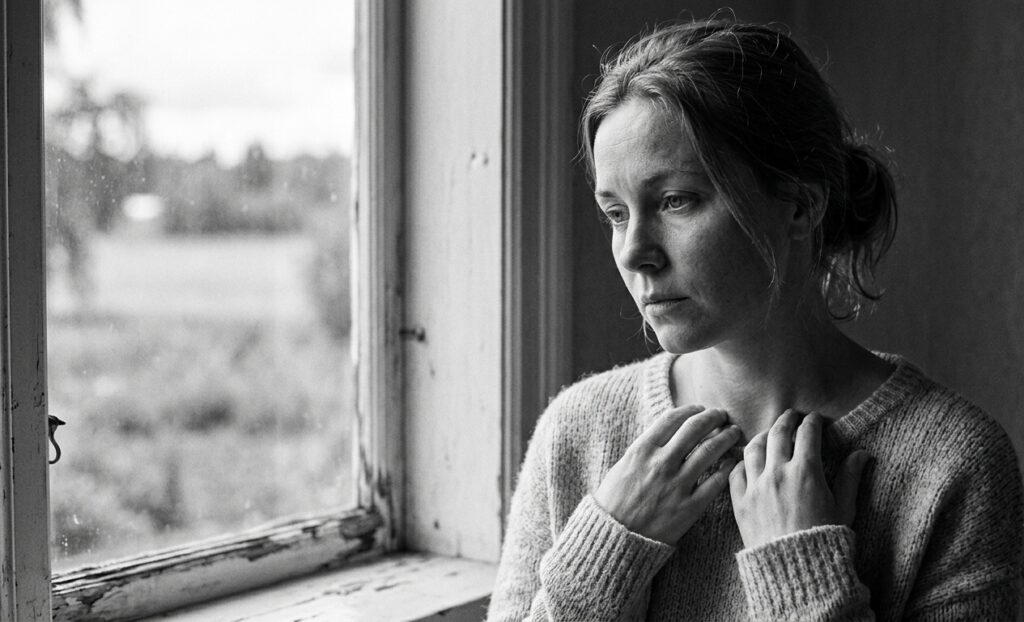
There are times when a woman tells herself that she is fine, and in many ways she may believe it. She may be managing work, caring for her family, meeting deadlines, showing up for other people, and doing her best to keep life in order. To those around her, she may seem steady, thoughtful, and completely in control.
But the body can tell another story.
Tension may rise without warning. The chest may tighten. Sleep may become restless or broken. The stomach may knot before an important conversation or after an unexpected reminder of the past. A certain voice, smell, place, facial expression, or tone may trigger fear before logic has had any chance to intervene. A woman may know she is safe in the present, yet her body may react as though danger is still close.
This experience can feel bewildering. It can also feel deeply discouraging. Many women wonder why they cannot simply think their way out of what they are feeling. They may ask themselves why they are still affected, why their body reacts so strongly, or why calm can feel so difficult to reach.
This is one of trauma’s most painful truths: the body often remembers what the mind has tried very hard to move past.
Trauma is not only something that lives in memory or thought. It is often carried in the body as well. It can show itself in tightened muscles, shallow breathing, disturbed sleep, heightened startle responses, racing thoughts, a guarded posture, exhaustion, digestive discomfort, or a nervous system that remains ready for threat. A woman may fully understand, on an intellectual level, that she is no longer in danger, while still experiencing very real physical reactions that suggest otherwise.
That can be confusing, but it is not irrational.
The body is not betraying her. It is protecting her in the language it learned through pain.
When someone has lived through fear, violation, loss, or prolonged distress, the body adapts to survive. It becomes alert to signals that might once have meant danger. It learns patterns. It stores associations. It prepares itself quickly, often before the thinking part of the mind has had time to assess what is happening. These responses are not chosen, and they are not signs of weakness. They are survival responses that once served an important purpose.
The challenge is that the body does not always know when the danger has truly ended.
Even long after a difficult experience is over, the nervous system may continue to respond as though protection is still urgently needed. This is why a woman may freeze during conflict, feel panic in ordinary situations, struggle to rest, or become overwhelmed by things that seem minor to other people. Her reactions may not make sense to those around her, and at times they may not even make sense to her. Yet the body is often responding to old patterns that were formed under pressure.
For this reason, healing from trauma is rarely only about changing thoughts.
Thought work can be valuable. Naming the wound matters. Understanding what happened can bring clarity and relief. Speaking the truth about pain can be deeply important. But trauma healing often asks for more than insight alone, because trauma affects more than the mind alone. A woman may know all the right things to tell herself and still find her heart racing, her breathing tightening, or her body bracing before she has consciously registered why.
This can lead to shame, especially in women who have spent years trying to be strong.
They may criticise themselves for overreacting. They may feel embarrassed by tears, panic, fatigue, numbness, sensitivity, or the need to withdraw. They may compare themselves with others and wonder why they cannot just let the past stay in the past. Some may even begin to feel angry with their own bodies, as though the body is making recovery harder rather than easier.
But a gentler and more truthful perspective is needed.
The body is not the enemy. It is not working against her. It is not trying to punish her or keep her trapped. It is carrying what it had to carry when survival mattered most. It is responding in ways that were learned during pain, fear, or instability. If it remains alert, tense, or guarded, it is often because it has not yet fully learned that the present is different from the past.
Seen in this light, the body becomes not a problem to silence but a witness to what has been endured.
It holds what words could not always express. It reflects what the mind may have needed to suppress. It reveals where fear still lingers, where tenderness is still required, and where healing is still unfolding. What appears to be an overreaction is often unprocessed distress. What looks like excessive sensitivity may be a nervous system that has spent too long protecting itself.
This is why trauma healing often includes practices that support the body as well as the mind. It may involve learning how to calm the nervous system through grounding, breathwork, gentle routine, rest, movement, and reducing unnecessary overwhelm. It may involve becoming aware of triggers without self-condemnation. It may involve learning how to pause, orient to the present, and reassure the body that this moment is not the same as the one it fears.
For some women, healing begins with very small physical acts of care. Feeling both feet on the ground. Taking a slower breath. Relaxing the shoulders. Opening a window. Drinking water. Wrapping themselves in warmth. Stepping away from an overstimulating environment. Letting the body experience a moment of safety without demanding instant transformation.
These acts may seem minor, but they matter. They create new experiences. They slowly teach the body that calm is possible, that rest can be safe, and that not every signal of alarm must lead to panic. Over time, repeated moments of safety can begin to reshape what the body expects.
This process is not usually quick. It is often gradual, uneven, and deeply personal. There may be setbacks. There may be days when old reactions return with surprising force. There may be moments of frustration when it feels as though progress has disappeared. But healing is rarely linear. A difficult day does not erase the work that has already been done.
The body learns through repetition. It learns through consistency. It learns through safe relationships, gentle responses, and environments that do not demand constant defence. Little by little, it can begin to soften what it once had to keep rigid. Breath can deepen. Sleep can become more restful. The chest can loosen. The jaw can unclench. The heart can stop sounding the alarm quite so quickly.
And perhaps most importantly, the body can begin to discover that protection no longer has to look like constant readiness for harm.
A woman does not need to be ashamed of the places where her body still speaks. Those places may be telling the truth about what she has survived. They may be revealing needs that were ignored for too long. They may be showing where compassion, safety, and steady care are still required.
To listen to the body in this way is not weakness. It is wisdom.
It is a way of honouring pain without allowing pain to define the future. It is a way of responding to distress with gentleness rather than judgement. It is a way of recognising that survival responses deserve understanding, even when they are no longer needed in the same form.
And slowly, with patience and support, the body can learn new truths.
It can learn that this moment is different.
It can learn that rest is not a threat.
It can learn that stillness can be safe.
It can learn that calm is possible.
It can learn that it does not have to remain in constant alarm to stay protected.
Healing takes time, and it often asks for more patience than a hurting woman feels she has. But the body can heal as surely as the mind can. The body can be taught softness as well as vigilance. It can be invited into safety, one moment at a time.
What it learned through pain is real. But what it can learn through safety is real too.
And that is where hope begins.
Written by Steve De’lano Garcia